
header-logo header-logo

05 December 2025
Issue: 8142 / Categories: Legal News , Public , Fraud
printer mail-detail

NLJ this week: The rise—and risks—of going private

237708
Why have private prosecutions surged despite limited data? Niall Hearty of Rahman Ravelli explores their rise in this week's NLJ 

Cuts to police and CPS resources, coupled with the explosion of fraud (now the most common offence), have encouraged victims to seek their own route to justice.

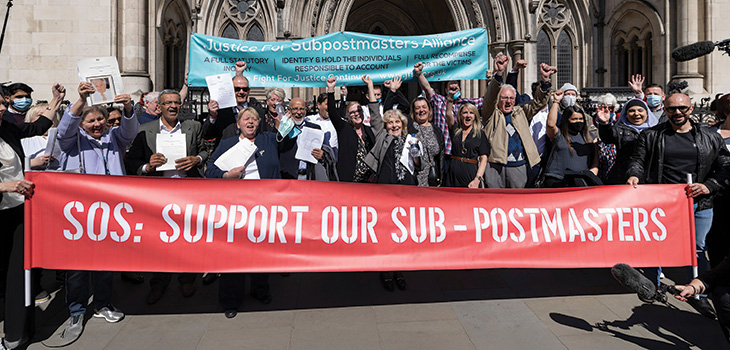
Yet Hearty cautions that private prosecutions are no universal solution: they demand swift evidence-gathering, strategic assessment and specialist expertise, particularly in complex, multi-jurisdictional fraud. Recent government concern—including consultation following the Post Office scandal and proposals in the Victims and Courts Bill to cap recoverable costs—signals mounting scrutiny of this increasingly prominent sector.

Hearty warns that poorly judged private prosecutions risk being counterproductive. Success depends on meticulous management, from initial evaluation to courtroom presentation, and may even prompt CPS intervention if the public interest demands it.

Issue: 8142 / Categories: Legal News , Public , Fraud
printer mail-details
RELATED ARTICLES

MOVERS & SHAKERS

Bellevue Law—Lianne Craig

Bellevue Law—Lianne Craig

Workplace law firm expands commercial disputes team with senior consultant hire

EIP—Rob Barker

EIP—Rob Barker

IP firm promotes patent attorney to partner

Muckle LLP—Ryan Butler

Muckle LLP—Ryan Butler

Banking and restructuring team bolstered by insolvency specialist

NEWS
The Supreme Court has delivered a decisive ruling on termination under the JCT Design & Build form. Writing in NLJ this week, Andrew Singer KC and Jonathan Ward, of Kings Chambers, analyse Providence Building Services v Hexagon Housing Association [2026] UKSC 1, which restores the first-instance decision and curbs contractors’ termination rights for repeated late payment
Secondments, disciplinary procedures and appeal chaos all feature in a quartet of recent rulings. Writing in NLJ this week, Ian Smith, barrister and emeritus professor of employment law at UEA, examines how established principles are being tested in modern disputes
The AI revolution is no longer a distant murmur—it’s at the client’s desk. Writing in NLJ this week, Peter Ambrose, CEO of The Partnership and Legalito, warns that the ‘AI chickens’ have ‘come home to roost’, transforming not just legal practice but the lawyer–client relationship itself
A High Court ruling involving the Longleat estate has exposed the fault line between modern family building and historic trust drafting. Writing in NLJ this week, Charlotte Coyle, director and family law expert at Freeths, examines Cator v Thynn [2026] EWHC 209 (Ch), where trustees sought approval to modernise trusts that retain pre-1970 definitions of ‘child’, ‘grandchild’ and ‘issue’
Fresh proposals to criminalise ‘nudification’ apps, prioritise cyberflashing and non-consensual intimate images, and even ban under-16s from social media have reignited debate over whether the Online Safety Act 2023 (OSA 2023) is fit for purpose. Writing in NLJ this week, Alexander Brown, head of technology, media and telecommunications, and Alexandra Webster, managing associate, Simmons & Simmons, caution against reactive law-making that could undermine the Act’s ‘risk-based and outcomes-focused’ design
back-to-top-scroll
