
header-logo header-logo

The Police, Crime, Sentencing & Courts Act 2022

13 May 2022 / Michael Zander KC
Issue: 7978 / Categories: Features , Public , Criminal
printer mail-detail
81380
Michael Zander on the final stages
  • Parliamentary ping-pong—Lords’ amendments and government changes.

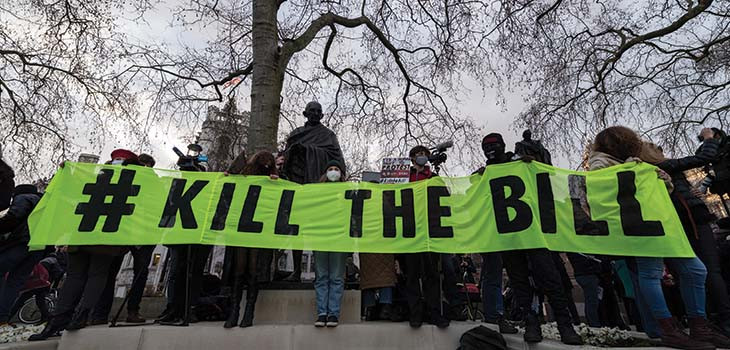
The Police, Crime, Sentencing and Courts Bill received Royal Assent on 28 April, 13 months after it was first introduced. The Lords spent 11 days on the committee stage and six days on the report stage. That resulted in no less than 161 amendments. Many were changes made by the government to its own Bill—though a considerable number had been stimulated by the opposition. There were also changes made by the Lords that were government defeats, but almost all of these were reversed by the Commons.

The provisions triggered by extreme Extinction Rebellion protests were first introduced just before midnight on 24 November 2021, at the very end of the committee stage in the Lords. But because of the late hour, their controversial content, the fact that they had not been considered by the Commons and the short notice, the government did not put them to the vote that night. They were re-introduced

If you are not a subscriber, subscribe now to read this content
If you are already a subscriber sign in
...or Register for two weeks' free access to subscriber content

MOVERS & SHAKERS

NLJ Career Profile: Kate Gaskell, Flex Legal

NLJ Career Profile: Kate Gaskell, Flex Legal

Kate Gaskell, CEO of Flex Legal, reflects on chasing her childhood dreams underscores the importance of welcoming those from all backgrounds into the profession

Dorsey & Whitney—Jonathan Christy

Dorsey & Whitney—Jonathan Christy

Dispute resolution team welcomes associate in London

Winckworth Sherwood—Kevin McManamon

Winckworth Sherwood—Kevin McManamon

Special education needs and mental capacity expert joins as partner

NEWS
Overcrowded prisons, mental health hospitals and immigration centres are failing to meet international and domestic human rights standards, the National Preventive Mechanism (NPM) has warned
Two speedier and more streamlined qualification routes have been launched for probate and conveyancing professionals
Workplace stress was a contributing factor in almost one in eight cases before the employment tribunal last year, indicating its endemic grip on the UK workplace
In Ward v Rai, the High Court reaffirmed that imprecise points of dispute can and will be struck out. Writing in NLJ this week, Amy Dunkley of Bolt Burdon Kemp reports on the decision and its implications for practitioners
Could the Supreme Court’s ruling in R v Hayes; R v Palombo unintentionally unsettle future complex fraud trials? Maia Cohen-Lask of Corker Binning explores the question in NLJ this week
back-to-top-scroll
