
header-logo header-logo

04 April 2025 / Dominic Regan
Issue: 8111 / Categories: Opinion , Legal services , Profession
printer mail-detail

The insider: 4 April 2025

214634
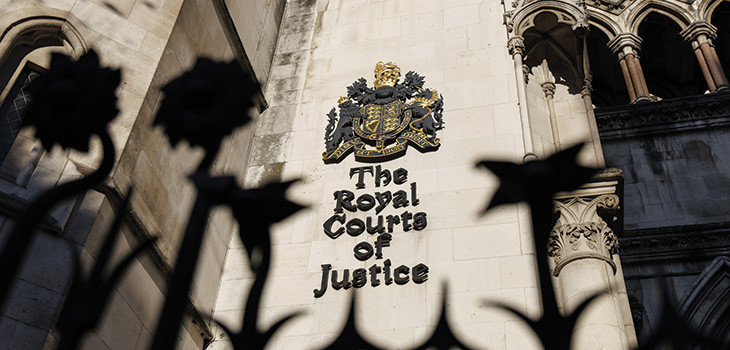
In his latest column, Dominic Regan laments the sorry state of the Royal Courts of Justice & presents a challenge to the High Court bench

On arriving at the Royal Courts of Justice last month, I was surprised to see a stern new notice at the entrance. Knuckledusters and fireworks are, among other items, no longer welcome. I blame Brexit.

The great palace of law is a sorry shadow of what it once was. The Great Hall, 70 metres long and 25 metres high, was deserted. Few courts were in operation. I saw from the daily list that some hearings were being conducted remotely.

Mrs Justice Steyn was however sitting in Court 13, presiding over a libel action brought by an actor, Noel Clarke, against Guardian News and Media Limited (I intend to comment on the case once judgment is delivered). Meanwhile, I was surprised to see two large screens displaying in legible text the paragraph in a witness statement which was the subject of cross-examination. This was a novelty

If you are not a subscriber, subscribe now to read this content
If you are already a subscriber sign in
...or Register for two weeks' free access to subscriber content

MOVERS & SHAKERS

Freeths—Rachel Crosier

Freeths—Rachel Crosier

Projects and rail practices strengthened by director hire in London

DWF—Stephen Hickling

DWF—Stephen Hickling

Real estate team in Birmingham welcomes back returning partner

Ward Hadaway—44 appointments

Ward Hadaway—44 appointments

Firm invests in national growth with 44 appointments across five offices

NEWS
Refusing ADR is risky—but not always fatal. Writing in NLJ this week, Masood Ahmed and Sanjay Dave Singh of the University of Leicester analyse Assensus Ltd v Wirsol Energy Ltd: despite repeated invitations to mediate, the defendant stood firm, made a £100,000 Part 36 offer and was ultimately ‘wholly vindicated’ at trial
The Police and Criminal Evidence Act 1984 transformed criminal justice. Writing in NLJ this week, Ed Cape of UWE and Matthew Hardcastle and Sandra Paul of Kingsley Napley trace its ‘seismic impact’
Operational resilience is no longer optional. Writing in NLJ this week, Emma Radmore and Michael Lewis of Womble Bond Dickinson explain how UK regulators expect firms to identify ‘important business services’ that could cause ‘intolerable levels of harm’ if disrupted
Criminal juries may be convicting—or acquitting—on a misunderstanding. Writing in NLJ this week Paul McKeown, Adrian Keane and Sally Stares of The City Law School and LSE report troubling survey findings on the meaning of ‘sure’
The Serious Fraud Office (SFO) has narrowly preserved a key weapon in its anti-corruption arsenal. In this week's NLJ, Jonathan Fisher KC of Red Lion Chambers examines Guralp Systems Ltd v SFO, in which the High Court ruled that a deferred prosecution agreement (DPA) remained in force despite the company’s failure to disgorge £2m by the stated deadline
back-to-top-scroll
