


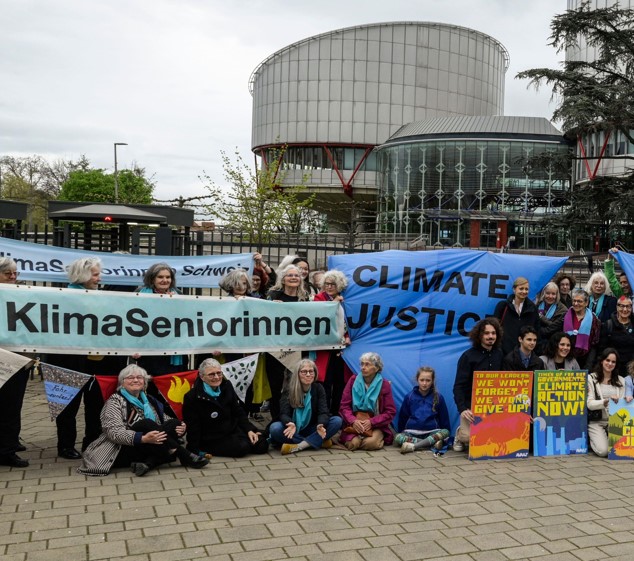
In Verein KlimaSeniorinnen Schweiz and Others v Switzerland (application no 53600/20), the group successfully argued their government’s inaction breached their Art 2 rights as their age and gender made them particularly susceptible to dying during heatwaves.
The Strasbourg court held by a 16:1 majority the Swiss authorities had breached Art 8 (private and family life) and, unanimously, they had breached Art 6(1) (access to court).
Specifically, the court found the Swiss authorities had failed to quantify, through a carbon budget or otherwise, national greenhouse gas emissions limitations, had failed to meet its past reduction targets, and had not acted in time and in an appropriate way to devise, develop and implement relevant legislation and measures.
Vesselina Newman, fundamental rights lead at ClientEarth, which submitted evidence to the court on the legal issues, said: ‘This is not just a win for these inspirational claimants but a huge victory for those everywhere seeking to use the power of the law to hold their government accountable for climate inaction.
‘This is also a European first for climate litigation. As this court ruling is binding, signatory states now have a clear legal duty to ensure their climate action is sufficient to protect human rights, and judges across Europe will have to apply these new principles to the growing number of climate cases before them.
‘The influence of these decisions also goes beyond Europe’s borders. Human-rights based climate cases are before courts in Brazil, Peru, Australia and South Korea, with these rulings potentially having an impact for those crucial proceedings as well.’
The Strasbourg court delivered Grand Chamber rulings in three climate change cases this week. In Duarte Agostinho and Others v Portugal and 32 Others (application no 39371/20), a claim by six Portuguese nationals born between 1999 and 2012 was declared inadmissible. Another climate change case brought by a former mayor of a French coastal town was also dismissed.



