
header-logo header-logo

Sir George joins the Supreme Court

15 April 2020
Issue: 7883 / Categories: Legal News , Profession , In Court
printer mail-detail
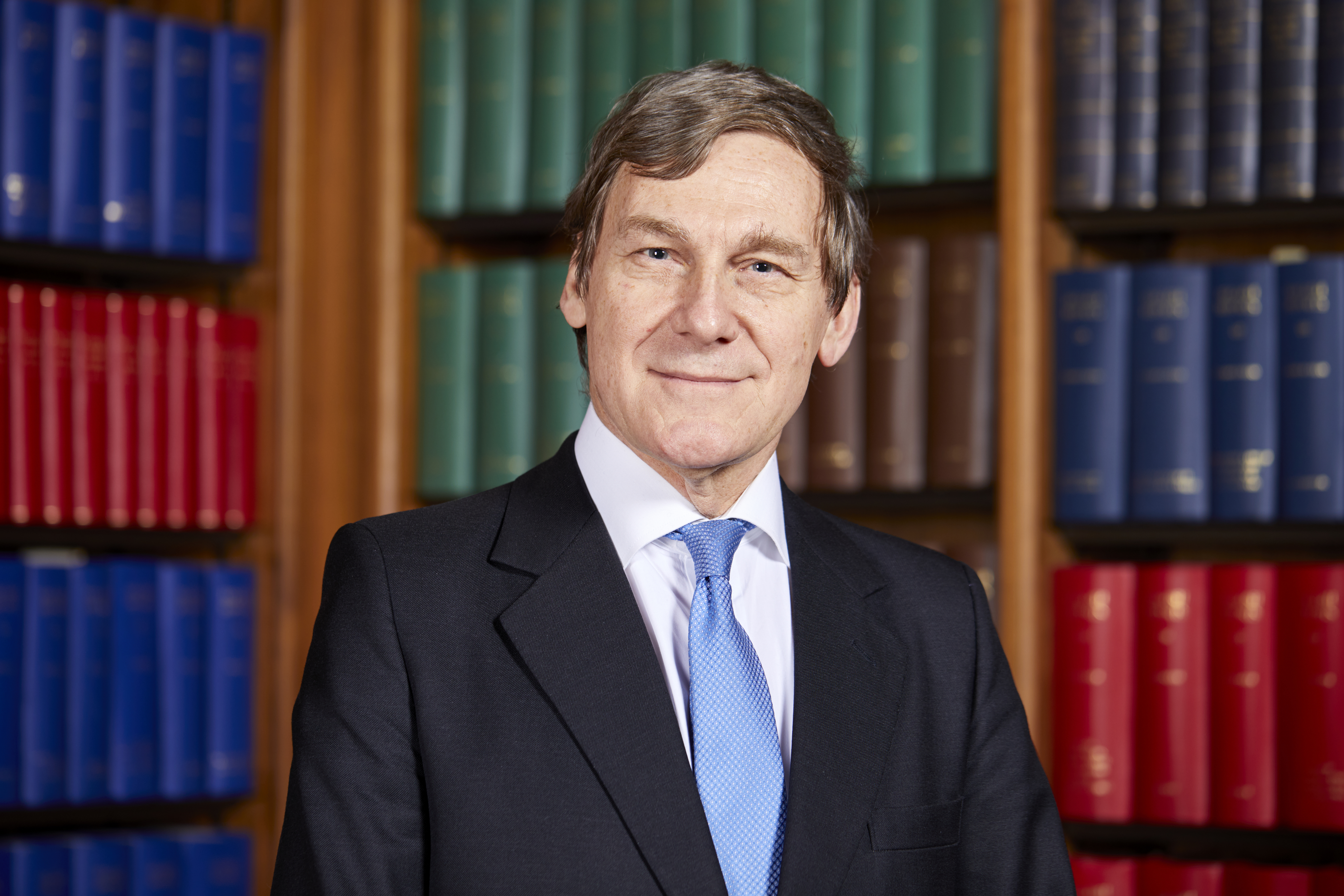
The Supreme Court will soon welcome its newest member, Lord Leggatt, a former commercial silk at Brick Court Chambers

Sir George Leggatt, currently Lord Justice Leggatt, will be sworn in as Justice in a closed ceremony on 21 April. However, the format of the ceremony has been modified due to social distancing requirements.

Under the Constitutional Reform Act 2005, which established the Supreme Court, a person appointed as a Justice must take the oaths in the presence of the President of the Court. As Sir George is due to sit as a Justice on 22 April, his swearing-in cannot be postponed. Therefore, the ceremony will take place in the Court’s Library rather than the usual Courtroom One before the President, Lord Reed with the other Justices taking part via video conference.

After attending King’s College, Cambridge and Harvard University, and teaching at the University of Chicago Law School, Sir George worked as a foreign lawyer at Sullivan & Cromwell’s New York office before joining Brick Court in 1985. He took silk in 1997 and practised until 2012, when he was appointed a High Court judge.

Sir George replaces Lord Carnwath, who retired on 6 March 2020.

Issue: 7883 / Categories: Legal News , Profession , In Court
printer mail-details

MOVERS & SHAKERS

Muckle LLP—Rachael Chapman

Muckle LLP—Rachael Chapman

Sports, education and charities practice welcomes senior associate

Ellisons—Carla Jones

Ellisons—Carla Jones

Partner and head of commercial litigation joins in Chelmsford

Freeths—Louise Mahon

Freeths—Louise Mahon

Firm strengthens Glasgow corporate practice with partner hire

NEWS
One in five in-house lawyers suffer ‘high’ or ‘severe’ work-related stress, according to a report by global legal body, the Association of Corporate Counsel (ACC)
The Legal Ombudsman’s (LeO’s) plea for a budget increase has been rejected by the Law Society and accepted only ‘with reluctance’ by conveyancers
Overcrowded prisons, mental health hospitals and immigration centres are failing to meet international and domestic human rights standards, the National Preventive Mechanism (NPM) has warned
Two speedier and more streamlined qualification routes have been launched for probate and conveyancing professionals
Workplace stress was a contributing factor in almost one in eight cases before the employment tribunal last year, indicating its endemic grip on the UK workplace
back-to-top-scroll
