

header-logo header-logo

Resolving inter‑charity ‘conflict’

26 March 2021 / Keith Wallace
Issue: 7926 / Categories: Features , Charities
printer mail-detail
43914
Conflict, property & indemnity in inter-charity dealings, investigated by Keith Wallace
  • Conflicts and constraints—essential knowledge.
  • Property—what does it comprise?
  • Indemnity—guidance needing re-delineation.

Charities work with each other. Government presses for greater efficiencies in the voluntary sector (eg, the Charities Act 2011 (CA 2011), s 14(4) ‘promote … effective use’). Structures need modernisation. So how do conflicts, property and indemnity inhibit common or desirable inter-charity dealings? See Table 1 for the types of transactions which concern us.
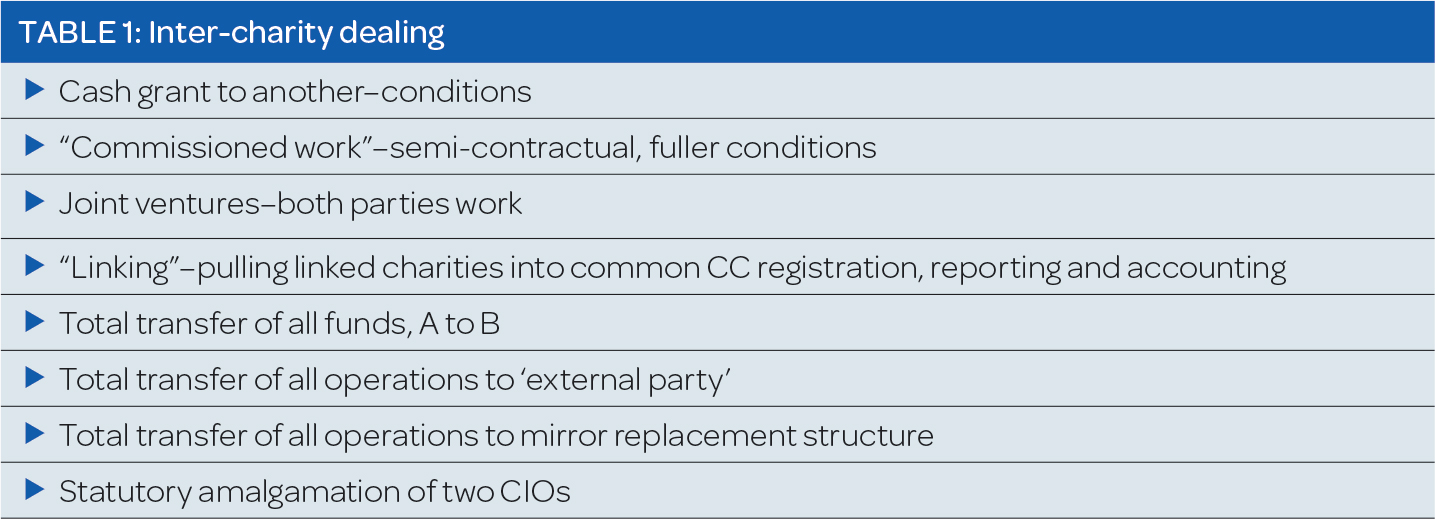
The steps for addressing conflicts are familiar and involve prior data capture/declaration, processes around ‘the’ decision, and subsequent public disclosure.

Then we need to drill down to the constraints. Charities’ constitutive documents are the starting point. Recent charities in the main adopt model constitutions promulgated by the Charity Commission, the Charity Law Association or umbrella bodies. New charities with unduly liberal bespoke clauses are unlikely to obtain registration. Conversely, historic foundations may bestow or permit benefit beyond modern conceptions of good practice.

Next are the statutory overlays. Charitable companies come both under the company

If you are not a subscriber, subscribe now to read this content
If you are already a subscriber sign in
...or Register for two weeks' free access to subscriber content

MOVERS & SHAKERS

Muckle LLP—Rachael Chapman

Muckle LLP—Rachael Chapman

Sports, education and charities practice welcomes senior associate

Ellisons—Carla Jones

Ellisons—Carla Jones

Partner and head of commercial litigation joins in Chelmsford

Freeths—Louise Mahon

Freeths—Louise Mahon

Firm strengthens Glasgow corporate practice with partner hire

NEWS
One in five in-house lawyers suffer ‘high’ or ‘severe’ work-related stress, according to a report by global legal body, the Association of Corporate Counsel (ACC)
The Legal Ombudsman’s (LeO’s) plea for a budget increase has been rejected by the Law Society and accepted only ‘with reluctance’ by conveyancers
Overcrowded prisons, mental health hospitals and immigration centres are failing to meet international and domestic human rights standards, the National Preventive Mechanism (NPM) has warned
Two speedier and more streamlined qualification routes have been launched for probate and conveyancing professionals
Workplace stress was a contributing factor in almost one in eight cases before the employment tribunal last year, indicating its endemic grip on the UK workplace
back-to-top-scroll
