
header-logo header-logo

Public inquiries: front-line evidence

21 July 2023 / Richard Scorer
Issue: 8034 / Categories: Opinion , Public , Inquests
printer mail-detail
131074
Public inquiries are most effective when their scrutiny goes below the surface, writes Richard Scorer

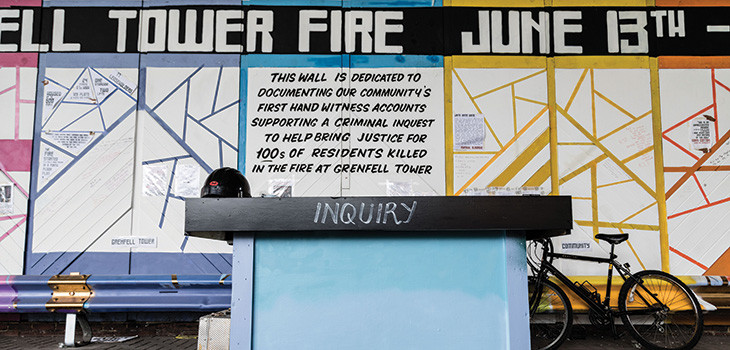
In recent years, a number of high-profile public inquiries have investigated serious failings by corporate bodies. To take four examples, the Independent Inquiry into Child Sexual Abuse (IICSA) sat between 2014 and 2022 and investigated responses to child sexual abuse by institutions in England and Wales. The Manchester Arena bombing inquiry sat between 2019 and 2023 and investigated multiple failures by various agencies, including police and security services. The Grenfell Tower inquiry, which has investigated multiple failings by corporate bodies, has been sitting since 2017. The COVID-19 inquiry, chaired by Baroness Hallett, commenced work last year and recently began hearings into the political response to the pandemic.

Public inquiries like these have the potential to achieve real change by improving responses to adverse events in the future, but only if the evidence of what went wrong is properly uncovered and scrutinised. Corporate bodies will inevitably seek to rebut criticism and justify actions taken. Evidence

If you are not a subscriber, subscribe now to read this content
If you are already a subscriber sign in
...or Register for two weeks' free access to subscriber content

MOVERS & SHAKERS

Freeths—Ruth Clare

Freeths—Ruth Clare

National real estate team bolstered by partner hire in Manchester

Farrer & Co—Claire Gordon

Farrer & Co—Claire Gordon

Partner appointed head of family team

mfg Solicitors—Neil Harrison

mfg Solicitors—Neil Harrison

Firm strengthens agriculture and rural affairs team with partner return

NEWS
Conveyancing lawyers have enjoyed a rapid win after campaigning against UK Finance’s decision to charge for access to the Mortgage Lenders’ Handbook
The Crown Prosecution Service (CPS) has launched a recruitment drive for talented early career and more senior barristers and solicitors
Regulators differed in the clarity and consistency of their post-Mazur advice and guidance, according to an interim report by the Legal Services Board (LSB)
The dangers of uncritical artificial intelligence (AI) use in legal practice are no longer hypothetical. In this week's NLJ, Dr Charanjit Singh of Holborn Chambers examines cases where lawyers relied on ‘hallucinated’ citations — entirely fictitious authorities generated by AI tools
The Solicitors Act 1974 may still underpin legal regulation, but its age is increasingly showing. Writing in NLJ this week, Victoria Morrison-Hughes of the Association of Costs Lawyers argues that the Act is ‘out of step with modern consumer law’ and actively deters fairness
back-to-top-scroll
