
header-logo header-logo

Privacy matters

26 July 2018 / Athelstane Aamodt
Issue: 7803 / Categories: Opinion , Freedom of Information
printer mail-detail
nlj_7803_aamodt

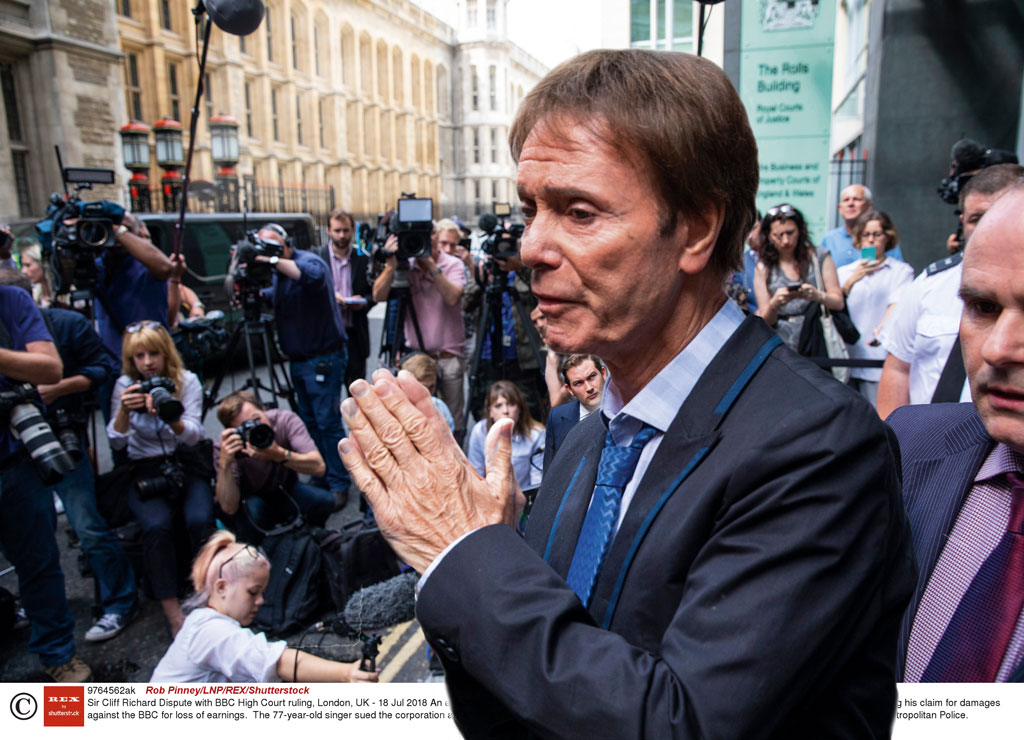
Sir Cliff’s victory will not end the tug of war between press freedom & the rights of individuals, says Athelstane Aamodt

The judgment of Mann J in the case of Sir Cliff Richard v The BBC & The Chief Constable of South Yorkshire Police [2018] EWHC 1837 (Ch) was set to be a hugely pivotal decision in the continual tug-of-war between press freedom and the rights of individuals, and so it proved to be. The judge’s ruling, that the BBC’s coverage of the search of Sir Cliff’s property in Berkshire by South Yorkshire Police in 2014 infringed his right to privacy, and that he is entitled to £210,000 in general damages (the special damage will be assessed later) will have a marked influence on what the press can and cannot say about the investigation of a suspect before arrest. But what will be the extent of that effect? And does this case, as some sections of the press have alleged, really take us down a dark road of unscrutinised police investigations and secrecy?

  • The first thing
If you are not a subscriber, subscribe now to read this content
If you are already a subscriber sign in
...or Register for two weeks' free access to subscriber content

MOVERS & SHAKERS

Freeths—Ruth Clare

Freeths—Ruth Clare

National real estate team bolstered by partner hire in Manchester

Farrer & Co—Claire Gordon

Farrer & Co—Claire Gordon

Partner appointed head of family team

mfg Solicitors—Neil Harrison

mfg Solicitors—Neil Harrison

Firm strengthens agriculture and rural affairs team with partner return

NEWS
Conveyancing lawyers have enjoyed a rapid win after campaigning against UK Finance’s decision to charge for access to the Mortgage Lenders’ Handbook
The Crown Prosecution Service (CPS) has launched a recruitment drive for talented early career and more senior barristers and solicitors
Regulators differed in the clarity and consistency of their post-Mazur advice and guidance, according to an interim report by the Legal Services Board (LSB)
The dangers of uncritical artificial intelligence (AI) use in legal practice are no longer hypothetical. In this week's NLJ, Dr Charanjit Singh of Holborn Chambers examines cases where lawyers relied on ‘hallucinated’ citations — entirely fictitious authorities generated by AI tools
The Solicitors Act 1974 may still underpin legal regulation, but its age is increasingly showing. Writing in NLJ this week, Victoria Morrison-Hughes of the Association of Costs Lawyers argues that the Act is ‘out of step with modern consumer law’ and actively deters fairness
back-to-top-scroll
