


What is phosphatidylethanol (PEth) testing?
A phosphatidylethanol (PEth) test is the gold standard of blood alcohol tests, and looks for the presence of PEth, an abnormal phospholipid and direct biomarker of alcohol, in a blood sample.
PEth requires ethanol (the intoxicating agent in alcoholic drinks) for its production, meaning that it is only present in the body when alcohol has been consumed, providing the most conclusive insight into a person’s drinking patterns.
When combined with other blood alcohol tests such as Carbohydrate Deficient Transferrin (CDT) testing, Liver Function Test (LFT) and Mean Corpuscular Volume (MCV) test, a thorough bank of evidence can be collated regarding an individual’s alcohol use.
Although PEth would always be the most conclusive of the tests, a more in-depth insight can be drawn by considering the results of all tests side-by-side.
This is especially important where the safeguarding of children and vulnerable people is paramount, enabling family law professionals and authorities to act on urgent welfare needs.
What makes PEth blood alcohol testing so conclusive?
Unlike other blood alcohol tests (CDT, LFT and MCV) – all of which are indirect biomarkers of alcohol that can be affected by pre-existing medical conditions, medications, and more – PEth is a direct biomarker of alcohol.
PEth production in the body begins as soon as ethanol is consumed and accumulates in the blood with frequent alcohol use, giving it a high specificity (48-89 per cent) and sensitivity (88-100 per cent).
In addition, daily alcohol consumption of more than 60g of ethanol (7.5 units) can clearly be distinguished from lower alcohol consumption, meaning that PEth testing can be used to detect chronic and single-drinking episodes.
The wealth of information provided by a PEth test is what makes it the most essential of all blood alcohol tests, enabling us to monitor abstinence, drinking behaviour, or identify relapse. It is also the only blood alcohol test that can be undertaken during pregnancy or within two months of the birth.
How far do PEth test results go back?
A PEth test can provide an overview of historic alcohol consumption of up to four weeks.
Furthermore, once PEth is formed in the body, it degrades very slowly, making it an extremely reliable indicator of alcohol use.
Experiments have shown that PEth can be detected in a blood sample in as little as one to two hours after a person has consumed alcohol and can remain in the blood for up to 12 days after a single drinking episode.
What will the results show in terms of alcohol consumption?
The results of a PEth blood alcohol test will show the PEth levels that were present in the blood at the time the person’s sample was collected.
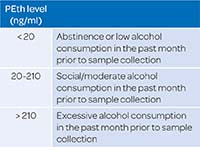
PEth accumulates in the blood with more frequent alcohol consumption, making it possible to determine whether a person has consumed alcohol in small/moderate amounts, or whether there has been excessive drinking in the four weeks prior to the blood sample being drawn.
The below table shows the range of PEth levels that can be measured using an AlphaBiolabs PEth blood alcohol test:
AlphaBiolabs offers two types of alcohol test reports: a Certificate of Analysis, which is included as standard and includes a summary of the results, or a Statement of Witness, which is an in-depth report with full analytical results, interpretation, and conclusions, for an additional fee.
While both documents are invaluable for court proceedings, a Statement of Witness provides the most comprehensive interpretation of the findings, including disclosures provided at the time of sample collection (e.g. how much alcohol the donor drinks in a typical week or how long they have been abstinent, if making such a claim).
Court-approved blood alcohol testing from AlphaBiolabs
In cases where the safeguarding of children and vulnerable people is paramount, PEth blood alcohol testing provides a rich source of information, enabling family law professionals and authorities to act as needed.
Our nationwide network of professional sample collectors are trained to collect a variety of samples under chain of custody, including blood samples for alcohol testing, and our test results are accepted by Family Courts, the Ministry of Justice and the Child Maintenance Service.
We also offer free sample collection for legally-instructed alcohol tests from our 13 walk-in centres, operating across the UK and Ireland.
Legal clients can claim 30% off AlphaBiolabs’ PEth blood alcohol testing until 28 February 2023. Simply cite PETH30 when requesting your quote.
For expert advice on which test is best for your client, call our Customer Services team on 0333 600 1300 or email testing@alphabiolabs.com and a member of our Legal team will be in touch.

Marie Law, Head of Toxicology at AlphaBiolabs
A highly-skilled and respected scientist with over 13 years’ experience in the field of forensics, Marie joined AlphaBiolabs in 2022 and oversees the company’s growing toxicology team.
As Head of Toxicology, Marie’s day-to-day responsibilities include maintaining the highest quality testing standards for toxicology and further enhancing AlphaBiolabs’ drug and alcohol testing services for the legal sector, members of the public, and the workplace sector.




