
header-logo header-logo

NLJ this week: Investigating the police over suspicionless stop & search

22 March 2024
Issue: 8064 / Categories: Legal News , Criminal , Public
printer mail-detail
164869

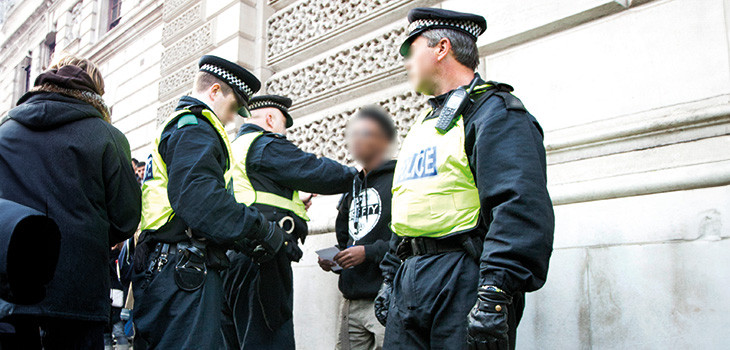
Following a super-complaint by the Criminal Justice Alliance, the police are under investigation for their use of s 60 suspicionless stop and search powers

Writing in this week’s NLJ, Neil Parpworth, of Leicester De Montfort Law School, looks into who can make a super-complaint, what is a ‘designated body’ for this purpose, and who will investigate.

Parpworth notes there are currently seven separate super-complaints against the police under investigation in the UK. 

He focuses on police use of s 60 of the Criminal Justice and Public Order Act 1994. What does this power comprise, how is it exercised, and how often is it used?

Parpworth assesses the investigation, which was ‘thorough’ apart from one aspect—they were unable to find anyone who had actually been stopped under s 60 to speak to them. He writes: ‘Given that there have been nearly 723,000 s 60 stop and searches during the past 22 years, this is both surprising and disappointing.’

Issue: 8064 / Categories: Legal News , Criminal , Public
printer mail-details

MOVERS & SHAKERS

Freeths—Ruth Clare

Freeths—Ruth Clare

National real estate team bolstered by partner hire in Manchester

Farrer & Co—Claire Gordon

Farrer & Co—Claire Gordon

Partner appointed head of family team

mfg Solicitors—Neil Harrison

mfg Solicitors—Neil Harrison

Firm strengthens agriculture and rural affairs team with partner return

NEWS
Conveyancing lawyers have enjoyed a rapid win after campaigning against UK Finance’s decision to charge for access to the Mortgage Lenders’ Handbook
The Crown Prosecution Service (CPS) has launched a recruitment drive for talented early career and more senior barristers and solicitors
Regulators differed in the clarity and consistency of their post-Mazur advice and guidance, according to an interim report by the Legal Services Board (LSB)
The dangers of uncritical artificial intelligence (AI) use in legal practice are no longer hypothetical. In this week's NLJ, Dr Charanjit Singh of Holborn Chambers examines cases where lawyers relied on ‘hallucinated’ citations — entirely fictitious authorities generated by AI tools
The Solicitors Act 1974 may still underpin legal regulation, but its age is increasingly showing. Writing in NLJ this week, Victoria Morrison-Hughes of the Association of Costs Lawyers argues that the Act is ‘out of step with modern consumer law’ and actively deters fairness
back-to-top-scroll
