
header-logo header-logo

02 August 2018
Categories: Movers & Shakers , Profession
printer mail-detail

NLJ PROFILE: Philip Sherwood, CILEx

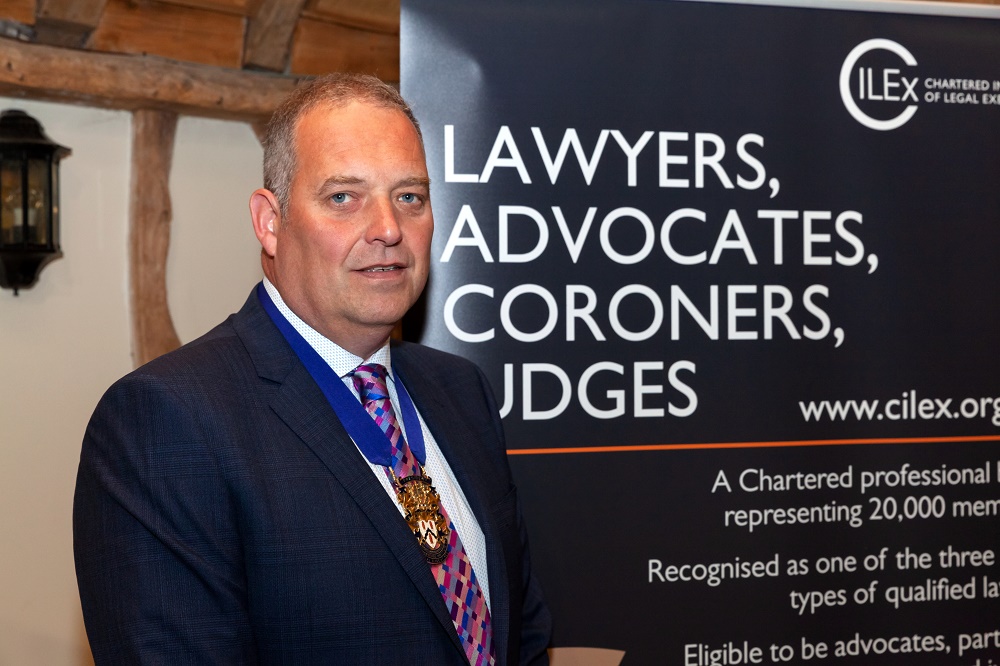
philip_sherwood_1

CILEx's new president discusses the art of motorcycle racing and more

What was your route into the profession?

I started work in the insurance industry as a claims clerk and developed an interest in law whilst dealing with claims. So, after taking an A-Level in law at college in the evenings and with a real desire for more study, I discovered that CILEx offered part-time legal study. The CILEx route enabled me to continue working and obtain a recognised legal qualification. It took me six years to qualify; during which time I found my first position with a law firm. It was long commute so after gaining experience, I managed to secure a position with a local firm where I qualified and went on to head their personal injury department.

What has been your biggest career challenge so far?

Without a doubt, the decision to leave a salaried position and work for myself as a consultant.

Which person within the legal profession inspires you most?

There are so many, but I have a soft spot for some of the district judges that I dealt with in my early career.There were some real characters! One DJ had a particular issue with legal representatives arriving late or not at all for hearings and would ask 'Mr Sherwood, what order would you like...and costs of today?'

If you weren’t a lawyer, what would you choose as an alternate career?

Anything involving working with motorcycles, a motorcycle travel writer would be great.

Who is your favourite fictional lawyer?

Harvey Specter from Suits

What change would you make to the profession?

Provide greater access to all to a law career and increase diversity in the profession.

How do you relax?

Spend time with my family or get out on my motorcycle. I ride a KTM Adventure and love to attend bike racing events and tour Europe with friends.

MOVERS & SHAKERS

Cripps—Radius Law

Cripps—Radius Law

Commercial and technology practice boosted by team hire

Switalskis—Grimsby

Switalskis—Grimsby

Firm expands with new Grimsby office to serve North East Lincolnshire

Slater Heelis—Will Newman & Lucy Spilsbury

Slater Heelis—Will Newman & Lucy Spilsbury

Property team boosted by two solicitor appointments

NEWS
The Supreme Court has delivered a decisive ruling on termination under the JCT Design & Build form. Writing in NLJ this week, Andrew Singer KC and Jonathan Ward, of Kings Chambers, analyse Providence Building Services v Hexagon Housing Association [2026] UKSC 1, which restores the first-instance decision and curbs contractors’ termination rights for repeated late payment
Secondments, disciplinary procedures and appeal chaos all feature in a quartet of recent rulings. Writing in NLJ this week, Ian Smith, barrister and emeritus professor of employment law at UEA, examines how established principles are being tested in modern disputes
The AI revolution is no longer a distant murmur—it’s at the client’s desk. Writing in NLJ this week, Peter Ambrose, CEO of The Partnership and Legalito, warns that the ‘AI chickens’ have ‘come home to roost’, transforming not just legal practice but the lawyer–client relationship itself
A High Court ruling involving the Longleat estate has exposed the fault line between modern family building and historic trust drafting. Writing in NLJ this week, Charlotte Coyle, director and family law expert at Freeths, examines Cator v Thynn [2026] EWHC 209 (Ch), where trustees sought approval to modernise trusts that retain pre-1970 definitions of ‘child’, ‘grandchild’ and ‘issue’
Fresh proposals to criminalise ‘nudification’ apps, prioritise cyberflashing and non-consensual intimate images, and even ban under-16s from social media have reignited debate over whether the Online Safety Act 2023 (OSA 2023) is fit for purpose. Writing in NLJ this week, Alexander Brown, head of technology, media and telecommunications, and Alexandra Webster, managing associate, Simmons & Simmons, caution against reactive law-making that could undermine the Act’s ‘risk-based and outcomes-focused’ design
back-to-top-scroll
