
header-logo header-logo

06 March 2024
Issue: 8062 / Categories: Legal News , Consumer
printer mail-detail

Lottery appeal dismissed but may spin consumer rethink

A Court of Appeal judge has suggested the Law Commission reviews consumer law after dismissing an appeal by a lottery player whose £1m win turned out to be a computer glitch

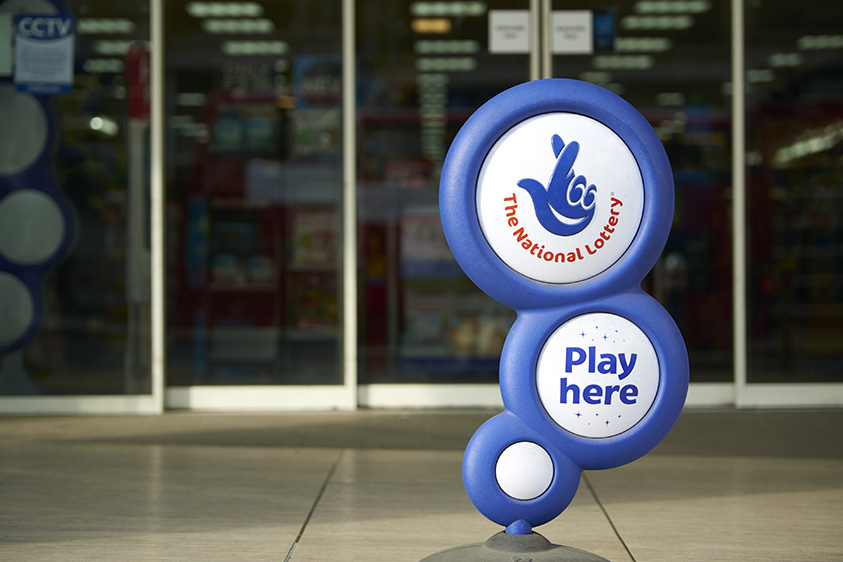
Parker-Grennan v Camelot UK Lotteries Ltd [2024] EWCA Civ 185 concerned an instant win game on the National Lottery website. She clicked ‘confirm’ to agree to the terms and conditions—a link at the bottom of the page led to the small print with hyperlinks to other terms—and played the game. The animations appeared to show she had won £1m—she quickly took a screenshot and rang Camelot without clicking ‘Finish’. Camelot told her she must click ‘Finish’ to complete the game. Sadly, when she did so, the screen showed she had only won £10.

The mistake was due to a coding issue, which generated an error in the Java software.

Joan Parker-Grennan sued for £1m, contending she followed the rules and any software error was Camelot’s problem, not hers. The High Court held for Camelot. The claimant’s appeal raised three issues: (i) Were Camelot’s terms incorporated in the contract? (ii) If so, were certain of those terms rendered unenforceable by the Unfair Terms in Consumer Contracts Regulations 1999? (iii) And as a matter of construction, did she win £1m or £10?

Giving the main judgment, Lady Justice Andrews held the claimant won £10 only, the terms were effectively incorporated, and none were onerous, unusual or unfair.

However, Andrews LJ said the case ‘squarely raised the issue of what needs to be done to incorporate standard terms and conditions into a contract for goods or services which is made online’.

‘So far as we are aware,’ she said, ‘this is the first case in which that issue has been considered by this court.’

She concluded: ‘The issues in this case have highlighted the complexity of balancing the needs of traders to publicise their terms and conditions with the needs of consumers to access and understand those terms. Given that a decade has passed since the last report of the Law Commission the time might be ripe for another, evidence-based, review of this area of law.’

Issue: 8062 / Categories: Legal News , Consumer
printer mail-details

MOVERS & SHAKERS

Cripps—Radius Law

Cripps—Radius Law

Commercial and technology practice boosted by team hire

Switalskis—Grimsby

Switalskis—Grimsby

Firm expands with new Grimsby office to serve North East Lincolnshire

Slater Heelis—Will Newman & Lucy Spilsbury

Slater Heelis—Will Newman & Lucy Spilsbury

Property team boosted by two solicitor appointments

NEWS
A High Court ruling involving the Longleat estate has exposed the fault line between modern family building and historic trust drafting. Writing in NLJ this week, Charlotte Coyle, director and family law expert at Freeths, examines Cator v Thynn [2026] EWHC 209 (Ch), where trustees sought approval to modernise trusts that retain pre-1970 definitions of ‘child’, ‘grandchild’ and ‘issue’
Fresh proposals to criminalise ‘nudification’ apps, prioritise cyberflashing and non-consensual intimate images, and even ban under-16s from social media have reignited debate over whether the Online Safety Act 2023 (OSA 2023) is fit for purpose. Writing in NLJ this week, Alexander Brown, head of technology, media and telecommunications, and Alexandra Webster, managing associate, Simmons & Simmons, caution against reactive law-making that could undermine the Act’s ‘risk-based and outcomes-focused’ design
Recent allegations surrounding Peter Mandelson and Andrew Mountbatten-Windsor have reignited scrutiny of the ancient common law offence of misconduct in public office. Writing in NLJ this week, Simon Parsons, teaching fellow at Bath Spa University, asks whether their conduct could clear a notoriously high legal hurdle
A landmark ruling has reshaped child clinical negligence claims. Writing in NLJ this week, Jodi Newton, head of birth and paediatric negligence at Osbornes Law, explains how the Supreme Court in CCC v Sheffield Teaching Hospitals NHS Foundation Trust [2026] UKSC 5 has overturned Croke v Wiseman, ending the long-standing bar on children recovering ‘lost years’ earnings
A Court of Appeal ruling has drawn a firm line under party autonomy in arbitration. Writing in NLJ this week, Masood Ahmed, associate professor at the University of Leicester, analyses Gluck v Endzweig [2026] EWCA Civ 145, where a clause allowing arbitrators to amend an award ‘at any time’ was held incompatible with the Arbitration Act 1996
back-to-top-scroll
