
header-logo header-logo

Lap dancing clubs: is one too many?

22 July 2022 / Zia Akhtar
Issue: 7988 / Categories: Features , Procedure & practice , Regulatory
printer mail-detail
88165
Sex entertainment venues: Zia Akhtar reports on local authority licensing powers & the ‘nil cap’ policy
  • The issue of sexual entertainment venues spans a wide spectrum of legal issues, including environmental, employment and local authority concerns, all of which impact on the licensing of the industry.
  • A number of local councils have effectively enacted bans of such venues by implementing the ‘nil cap’ policy (thereby restricting the number of permitted venues to zero).

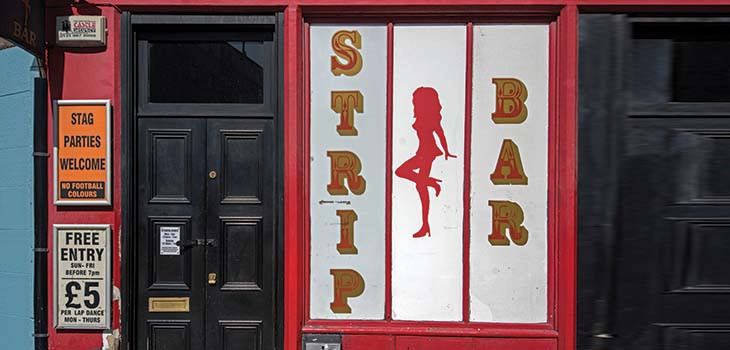
Lap dancing clubs are classified under s 27 of the Policing and Crime Act 2009 (PCA 2009) as ‘sexual entertainment venues’ (SEVs). They were licensed to operate under the local authority’s power to grant them a licence and the entertainment they offered was any live performance or display of nudity for the purpose of ‘sexually stimulating’ any member of the audience.

The ban by Edinburgh City Council on all strip clubs in March 2022 (against which the United Sex Workers union has now sought to launch a legal challenge) and the ongoing public consultation issued

If you are not a subscriber, subscribe now to read this content
If you are already a subscriber sign in
...or Register for two weeks' free access to subscriber content

MOVERS & SHAKERS

NLJ Career Profile: Kate Gaskell, Flex Legal

NLJ Career Profile: Kate Gaskell, Flex Legal

Kate Gaskell, CEO of Flex Legal, reflects on chasing her childhood dreams underscores the importance of welcoming those from all backgrounds into the profession

Dorsey & Whitney—Jonathan Christy

Dorsey & Whitney—Jonathan Christy

Dispute resolution team welcomes associate in London

Winckworth Sherwood—Kevin McManamon

Winckworth Sherwood—Kevin McManamon

Special education needs and mental capacity expert joins as partner

NEWS
Overcrowded prisons, mental health hospitals and immigration centres are failing to meet international and domestic human rights standards, the National Preventive Mechanism (NPM) has warned
Two speedier and more streamlined qualification routes have been launched for probate and conveyancing professionals
Workplace stress was a contributing factor in almost one in eight cases before the employment tribunal last year, indicating its endemic grip on the UK workplace
In NLJ this week, Ian Smith, emeritus professor at UEA, explores major developments in employment law from the Supreme Court and appellate courts
Writing in NLJ this week, Kamran Rehman and Harriet Campbell of Penningtons Manches Cooper examine Operafund Eco-Invest SICAV plc v Spain, where the Commercial Court held that ICSID and Energy Charter Treaty awards cannot be assigned
back-to-top-scroll
