
header-logo header-logo

05 October 2022
Issue: 7997 / Categories: Legal News , Profession , Criminal , Legal services
printer mail-detail

Criminal Bar votes as solicitors look to the exit

Barristers will vote this week on whether to suspend their strike following an offer from the Lord Chancellor, Brandon Lewis.

The ballot closes on Sunday, with the results announced the following day.

Lewis, who was sworn in as Lord Chancellor last week, offered an extra £54m. Under the revised offer, the proposed 15% fee increase would apply to the ‘vast majority’ of cases currently in the crown court. Other measures to tackle the backlog would be ‘explored’, such as ‘increasing early resolution of cases, reducing the number of ineffective trials and progressing cases between magistrates’ courts and the crown court’.

Meanwhile, criminal law solicitors are considering withdrawing their labour in protest at the 9% increase offered to them.

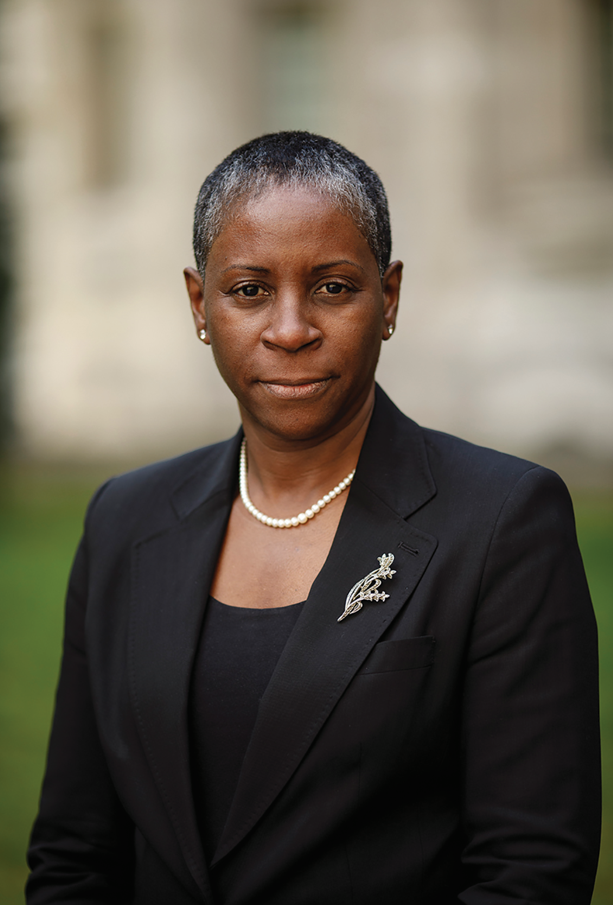
Law Society president I Stephanie Boyce (pictured) said: ‘Reaching a compromise with criminal barristers but not providing parity for solicitors is short-sighted given it is solicitors who make up the greater part of the criminal defence sector.

‘The independent review the government commissioned made clear solicitors are in an even worse financial situation than their counterparts. Solicitors are the backbone of the criminal justice system, advising their clients from the first moment at the police station, through to passing of a sentence.

‘They are not taking short-term disruptive action. They are simply leaving the profession permanently, in ever greater numbers because the work is not financially viable. And yet the government is currently proposing only a 9% rate increase for solicitors, 40% less than the 15% being offered to barristers, and far less than the bare minimum the Bellamy report concluded was needed for criminal defence solicitors’ firms to remain economically viable.’

Boyce warned: ‘If solicitors do not get parity on the bare minimum 15% recommended by Lord Bellamy, the MoJ will have made it clear that there is no future in criminal defence practice and we will advise our members not to undertake this work. No responsible organisation could truthfully advise otherwise.’

In his swearing-in speech last week, Lewis said he wanted ‘to explore options for reforming the Probation Service’ and was ‘determined to make public protection the overriding factor in parole decisions’.

Issue: 7997 / Categories: Legal News , Profession , Criminal , Legal services
printer mail-details

MOVERS & SHAKERS

Cripps—Radius Law

Cripps—Radius Law

Commercial and technology practice boosted by team hire

Switalskis—Grimsby

Switalskis—Grimsby

Firm expands with new Grimsby office to serve North East Lincolnshire

Slater Heelis—Will Newman & Lucy Spilsbury

Slater Heelis—Will Newman & Lucy Spilsbury

Property team boosted by two solicitor appointments

NEWS
A High Court ruling involving the Longleat estate has exposed the fault line between modern family building and historic trust drafting. Writing in NLJ this week, Charlotte Coyle, director and family law expert at Freeths, examines Cator v Thynn [2026] EWHC 209 (Ch), where trustees sought approval to modernise trusts that retain pre-1970 definitions of ‘child’, ‘grandchild’ and ‘issue’
Fresh proposals to criminalise ‘nudification’ apps, prioritise cyberflashing and non-consensual intimate images, and even ban under-16s from social media have reignited debate over whether the Online Safety Act 2023 (OSA 2023) is fit for purpose. Writing in NLJ this week, Alexander Brown, head of technology, media and telecommunications, and Alexandra Webster, managing associate, Simmons & Simmons, caution against reactive law-making that could undermine the Act’s ‘risk-based and outcomes-focused’ design
Recent allegations surrounding Peter Mandelson and Andrew Mountbatten-Windsor have reignited scrutiny of the ancient common law offence of misconduct in public office. Writing in NLJ this week, Simon Parsons, teaching fellow at Bath Spa University, asks whether their conduct could clear a notoriously high legal hurdle
A landmark ruling has reshaped child clinical negligence claims. Writing in NLJ this week, Jodi Newton, head of birth and paediatric negligence at Osbornes Law, explains how the Supreme Court in CCC v Sheffield Teaching Hospitals NHS Foundation Trust [2026] UKSC 5 has overturned Croke v Wiseman, ending the long-standing bar on children recovering ‘lost years’ earnings
A Court of Appeal ruling has drawn a firm line under party autonomy in arbitration. Writing in NLJ this week, Masood Ahmed, associate professor at the University of Leicester, analyses Gluck v Endzweig [2026] EWCA Civ 145, where a clause allowing arbitrators to amend an award ‘at any time’ was held incompatible with the Arbitration Act 1996
back-to-top-scroll
