
header-logo header-logo

Cold comfort for farmers

29 November 2024 / William Gibson
Issue: 8096 / Categories: Features , Inheritance tax , Employment
printer mail-detail
199155
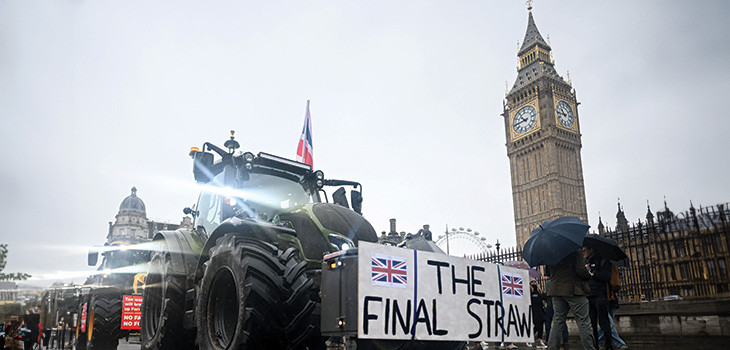
With angry farmers hitting the headlines, William Gibson recalls an earlier story of rural revolt & how justice was finally served

Sir Keir Starmer’s government isn’t the first to engage the farming industry in battle. Chancellor Rachel Reeves can expect a rural backlash to her budget even more effective than the last one.

In 1834, six farm labourers from Tolpuddle in Dorset formed a secret society, aimed at improving agricultural wages and countering exploitation by landowners. They swore an oath: ‘If any master reduces wages, all members of the Society would walk out.’

The Friendly Society of Agricultural Labourers

During the Napoleonic Wars, providing the forces with food at inflated prices had made farm owners wealthy and allowed them to invest in labour-saving machinery. When the conflict ended in 1815, demand fell drastically, as did prices; labourers were sacked and wages reduced for those remaining. The highest paid labourers earned nine shillings a week (less than £20 in today’s money). A married labourer with children over the age of six

If you are not a subscriber, subscribe now to read this content
If you are already a subscriber sign in
...or Register for two weeks' free access to subscriber content

MOVERS & SHAKERS

Freeths—Ruth Clare

Freeths—Ruth Clare

National real estate team bolstered by partner hire in Manchester

Farrer & Co—Claire Gordon

Farrer & Co—Claire Gordon

Partner appointed head of family team

mfg Solicitors—Neil Harrison

mfg Solicitors—Neil Harrison

Firm strengthens agriculture and rural affairs team with partner return

NEWS
Conveyancing lawyers have enjoyed a rapid win after campaigning against UK Finance’s decision to charge for access to the Mortgage Lenders’ Handbook
The Crown Prosecution Service (CPS) has launched a recruitment drive for talented early career and more senior barristers and solicitors
Regulators differed in the clarity and consistency of their post-Mazur advice and guidance, according to an interim report by the Legal Services Board (LSB)
The dangers of uncritical artificial intelligence (AI) use in legal practice are no longer hypothetical. In this week's NLJ, Dr Charanjit Singh of Holborn Chambers examines cases where lawyers relied on ‘hallucinated’ citations — entirely fictitious authorities generated by AI tools
The Solicitors Act 1974 may still underpin legal regulation, but its age is increasingly showing. Writing in NLJ this week, Victoria Morrison-Hughes of the Association of Costs Lawyers argues that the Act is ‘out of step with modern consumer law’ and actively deters fairness
back-to-top-scroll
