
header-logo header-logo

Book review: The Last Law Lords and the Supreme Court

14 February 2014
Issue: 7594 / Categories: Features
printer mail-detail
web_bookreview

"The book mines this rich vein extremely effectively, wherever relevant assessing what has changed both over the past 40 years since Paterson’s earlier book"

Author: Alan Paterson
Publisher: Hart

ISBN: 9781849463836
Price: £25.00

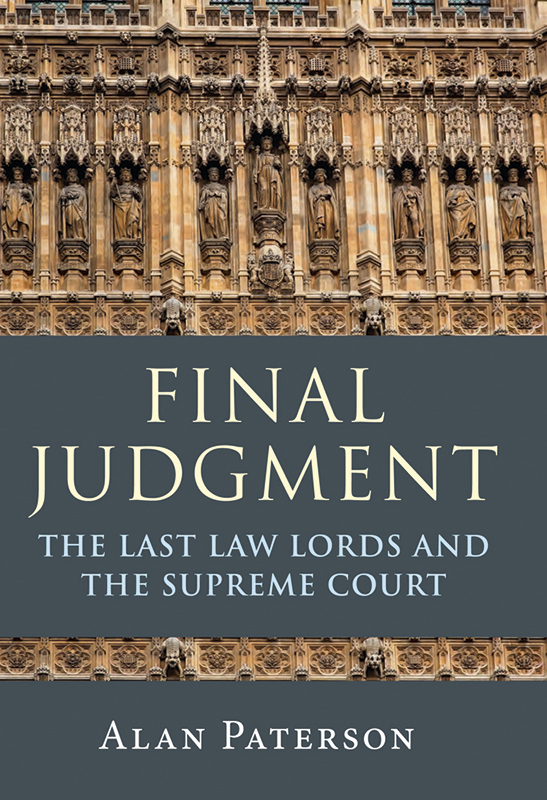
Professor Alan Paterson’s new book Final Judgment—The Last Law Lords and the Supreme Court is an admirably researched, readable and fascinating addition to the growing literature on how judges go about their work. His theme is judicial decision-making as a social process based on the different “dialogues” in which the judges engage.

The dialogues range from the traditional (with counsel), to the novel (with judicial assistants), from the near (the Court of Appeal) to the far (other supreme courts), from the theoretical (with academics) to the practical (the law reporters), from the open (with Parliament) to the forbidden (with government). Some, such as that with precedents may be with the dead. Some are more symbolic than real, eg with Parliament or the Executive. Some are with the future, eg a dissent.

Rich vein

Paterson subjects each of

If you are not a subscriber, subscribe now to read this content
If you are already a subscriber sign in
...or Register for two weeks' free access to subscriber content

MOVERS & SHAKERS

Muckle LLP—Rachael Chapman

Muckle LLP—Rachael Chapman

Sports, education and charities practice welcomes senior associate

Ellisons—Carla Jones

Ellisons—Carla Jones

Partner and head of commercial litigation joins in Chelmsford

Freeths—Louise Mahon

Freeths—Louise Mahon

Firm strengthens Glasgow corporate practice with partner hire

NEWS
One in five in-house lawyers suffer ‘high’ or ‘severe’ work-related stress, according to a report by global legal body, the Association of Corporate Counsel (ACC)
The Legal Ombudsman’s (LeO’s) plea for a budget increase has been rejected by the Law Society and accepted only ‘with reluctance’ by conveyancers
Overcrowded prisons, mental health hospitals and immigration centres are failing to meet international and domestic human rights standards, the National Preventive Mechanism (NPM) has warned
Two speedier and more streamlined qualification routes have been launched for probate and conveyancing professionals
Workplace stress was a contributing factor in almost one in eight cases before the employment tribunal last year, indicating its endemic grip on the UK workplace
back-to-top-scroll
