
header-logo header-logo

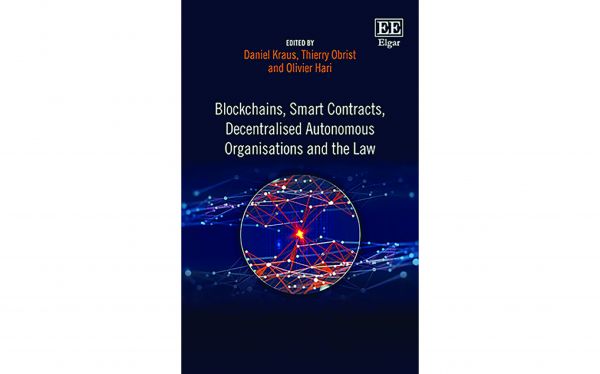
Book review: Blockchain, smart contracts, decentralised autonomous organisations and the law

04 February 2020 / Malcolm Dowden
Issue: 7873 / Categories: Features , Cybercrime
printer mail-detail
15316
Editors: Daniel Kraus, Thierry Obrist, Olivier Hari
Publisher: Edward Elgar Publishing, 2019
ISBN: 978 1 78811 512 4
Pages: 384
RRP: £110

On 18 November 2019 the UK Jurisdiction Taskforce of the Law Delivery Panel delivered a 46-page legal statement concluding that:

  • cryptoassets, including virtual currencies, can in principle be treated as property, and
  • smart contracts are capable of satisfying the requirements of contracts in English law and are thus enforceable by the courts.

This followed the Law Commission’s statement, confirmed by the court in Neocleous v Rees [2019] EWHC 2462 (CH), that statutory requi rements for a signature can be met by electronic means.

Prompted by those significant legal development, practitioners are likely to be looking for reliable and up-to-date information on the relevant technologies and emerging business structures. Professor Daniel Kraus and a team of expert contributors have provided an excellent overview of the key issues, ranging from the practical and legal characteristics of blockchain to the major concerns

If you are not a subscriber, subscribe now to read this content
If you are already a subscriber sign in
...or Register for two weeks' free access to subscriber content

MOVERS & SHAKERS

Quinn Emanuel—James McSweeney

Quinn Emanuel—James McSweeney

London promotion underscores firm’s investment in white collar and investigations

Ward Hadaway—Louise Miller

Ward Hadaway—Louise Miller

Private client team strengthened by partner appointment

NLJ Career Profile: Kate Gaskell, Flex Legal

NLJ Career Profile: Kate Gaskell, Flex Legal

Kate Gaskell, CEO of Flex Legal, reflects on chasing her childhood dreams underscores the importance of welcoming those from all backgrounds into the profession

NEWS
Overcrowded prisons, mental health hospitals and immigration centres are failing to meet international and domestic human rights standards, the National Preventive Mechanism (NPM) has warned
Two speedier and more streamlined qualification routes have been launched for probate and conveyancing professionals
Workplace stress was a contributing factor in almost one in eight cases before the employment tribunal last year, indicating its endemic grip on the UK workplace
In NLJ this week, Ian Smith, emeritus professor at UEA, explores major developments in employment law from the Supreme Court and appellate courts
Writing in NLJ this week, Kamran Rehman and Harriet Campbell of Penningtons Manches Cooper examine Operafund Eco-Invest SICAV plc v Spain, where the Commercial Court held that ICSID and Energy Charter Treaty awards cannot be assigned
back-to-top-scroll
