
header-logo header-logo

‘I predict a riot…’

02 September 2020 / Lucy McCormick
Issue: 7900 / Categories: Opinion , Covid-19 , Criminal
printer mail-detail
26562
Lucy McCormick reviews the legal regime which applies to property damage caused by riots

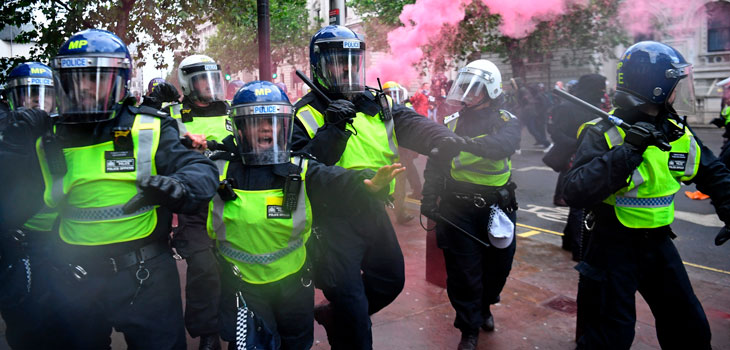
On 31 July 2020, the Scientific Advisory Group for Emergencies (SAGE) released a paper on public disorder and public health. This included the following prediction:

‘In the next few weeks and months the UK will face grave challenges to public order. The situation is volatile and highly complex. While widespread urban disorder is not inevitable, currently, the situation in the UK is precariously balanced and the smallest error in policing (whether perceived or real, inside or outside the UK) or policy could unleash a dynamic which will make the management of COVID-19 all but impossible… This potential disorder could be comparable or bigger in scale to the rioting of August 2011.’

Against this background, it is timely to consider the legislative regime which applies to property damage in the event of rioting. Claims for compensation arising out of the August 2011 riots were subject to the Riot (Damages) Act 1886. This Act was widely criticised as outdated, not

If you are not a subscriber, subscribe now to read this content
If you are already a subscriber sign in
...or Register for two weeks' free access to subscriber content

MOVERS & SHAKERS

NLJ Career Profile: Kate Gaskell, Flex Legal

NLJ Career Profile: Kate Gaskell, Flex Legal

Kate Gaskell, CEO of Flex Legal, reflects on chasing her childhood dreams underscores the importance of welcoming those from all backgrounds into the profession

Dorsey & Whitney—Jonathan Christy

Dorsey & Whitney—Jonathan Christy

Dispute resolution team welcomes associate in London

Winckworth Sherwood—Kevin McManamon

Winckworth Sherwood—Kevin McManamon

Special education needs and mental capacity expert joins as partner

NEWS
Overcrowded prisons, mental health hospitals and immigration centres are failing to meet international and domestic human rights standards, the National Preventive Mechanism (NPM) has warned
Two speedier and more streamlined qualification routes have been launched for probate and conveyancing professionals
Workplace stress was a contributing factor in almost one in eight cases before the employment tribunal last year, indicating its endemic grip on the UK workplace
Professor Dominic Regan of City Law School highlights a turbulent end to 2025 in the civil courts, from the looming appeal in Mazur to judicial frustration with ever-expanding bundles, in his final NLJ 'The insider' column of the year
Antonia Glover of Quinn Emanuel outlines sweeping transparency reforms following the work of the Transparency and Open Justice Board in this week's NLJ
back-to-top-scroll
