
header-logo header-logo

The UK Internal Market Bill: Yea for the House of Lords

08 January 2021 / Michael Zander KC
Issue: 7915 / Categories: Features , Brexit , EU , Constitutional law
printer mail-detail
34762
Michael Zander on the last stages of the UK Internal Market Bill

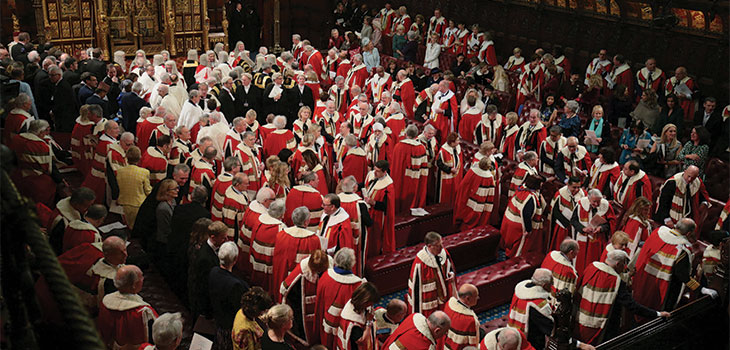
The parliamentary debates on the United Kingdom Internal Market Bill came to a surprising harmonious ending on the evening of Tuesday 15 December.

The purpose of the Bill, as its title indicates, is to regulate the UK single market after the ending of the Brexit transition period. Most of the many hours both Houses spent debating the Bill were devoted to two topics. One was Part 5 of the Bill with its notorious clauses 44, 45 and 47 allowing ministers to issue regulations that the Government admitted would be in breach of international law. Part 5 of the Bill provoked uproar.

On November 9, the House of Lords, led by former Lord Chief Justice Lord Judge, voted to remove the whole of Part 5 by the crushing majority of 433 to 165. The 44 Conservative peers who voted against the Government included the Party’s former Leader, Lord Howard of Lympne,

If you are not a subscriber, subscribe now to read this content
If you are already a subscriber sign in
...or Register for two weeks' free access to subscriber content

MOVERS & SHAKERS

Freeths—Ruth Clare

Freeths—Ruth Clare

National real estate team bolstered by partner hire in Manchester

Farrer & Co—Claire Gordon

Farrer & Co—Claire Gordon

Partner appointed head of family team

mfg Solicitors—Neil Harrison

mfg Solicitors—Neil Harrison

Firm strengthens agriculture and rural affairs team with partner return

NEWS
Conveyancing lawyers have enjoyed a rapid win after campaigning against UK Finance’s decision to charge for access to the Mortgage Lenders’ Handbook
The Crown Prosecution Service (CPS) has launched a recruitment drive for talented early career and more senior barristers and solicitors
Regulators differed in the clarity and consistency of their post-Mazur advice and guidance, according to an interim report by the Legal Services Board (LSB)
The Solicitors Act 1974 may still underpin legal regulation, but its age is increasingly showing. Writing in NLJ this week, Victoria Morrison-Hughes of the Association of Costs Lawyers argues that the Act is ‘out of step with modern consumer law’ and actively deters fairness
A Competition Appeal Tribunal (CAT) ruling has reopened debate on the availability of ‘user damages’ in competition claims. Writing in NLJ this week, Edward Nyman of Hausfeld explains how the CAT allowed Dr Liza Lovdahl Gormsen’s alternative damages case against Meta to proceed, rejecting arguments that such damages are barred in competition law
back-to-top-scroll
