
header-logo header-logo

03 March 2017 / Brice Dickson
Issue: 7736 / Categories: Features , In Court
printer mail-detail

Supreme justice

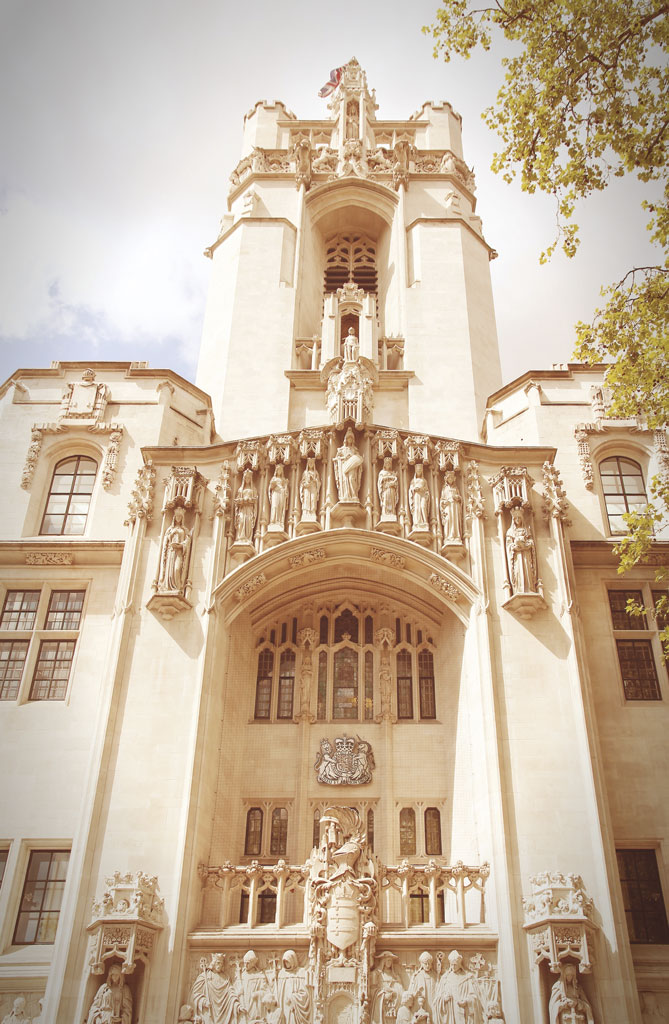
nlj_7736_dickson

Brice Dickson examines the activity of the Supreme Court in 2016

The only change to the composition of the Supreme Court during 2016 was the retirement of Lord Toulson in September. The court decided not to immediately appoint a replacement but to await the retirement of Lord Neuberger (the President) and Lord Clarke in the summer of 2017. Lords Hughes, Mance and Sumption are due to retire in 2018. A competition to find three replacement Justices began in February and a second competition for three more will take place in 2018.

In the meantime Lord Toulson and Lord Dyson (who retired as Master of the Rolls in 2016) have joined the Supplementary Panel of retired senior judges who can sit in the Supreme Court as and when required. They are eligible to do so until they reach the age of 75 or until five years have elapsed since they last held office as a senior judge. Two retired Scottish judges, Lord Gill and Lord Hamilton, are already members of the Panel.

The output

In 2016

If you are not a subscriber, subscribe now to read this content
If you are already a subscriber sign in
...or Register for two weeks' free access to subscriber content

MOVERS & SHAKERS

Cripps—Radius Law

Cripps—Radius Law

Commercial and technology practice boosted by team hire

Switalskis—Grimsby

Switalskis—Grimsby

Firm expands with new Grimsby office to serve North East Lincolnshire

Slater Heelis—Will Newman & Lucy Spilsbury

Slater Heelis—Will Newman & Lucy Spilsbury

Property team boosted by two solicitor appointments

NEWS
A High Court ruling involving the Longleat estate has exposed the fault line between modern family building and historic trust drafting. Writing in NLJ this week, Charlotte Coyle, director and family law expert at Freeths, examines Cator v Thynn [2026] EWHC 209 (Ch), where trustees sought approval to modernise trusts that retain pre-1970 definitions of ‘child’, ‘grandchild’ and ‘issue’
Fresh proposals to criminalise ‘nudification’ apps, prioritise cyberflashing and non-consensual intimate images, and even ban under-16s from social media have reignited debate over whether the Online Safety Act 2023 (OSA 2023) is fit for purpose. Writing in NLJ this week, Alexander Brown, head of technology, media and telecommunications, and Alexandra Webster, managing associate, Simmons & Simmons, caution against reactive law-making that could undermine the Act’s ‘risk-based and outcomes-focused’ design
Recent allegations surrounding Peter Mandelson and Andrew Mountbatten-Windsor have reignited scrutiny of the ancient common law offence of misconduct in public office. Writing in NLJ this week, Simon Parsons, teaching fellow at Bath Spa University, asks whether their conduct could clear a notoriously high legal hurdle
A landmark ruling has reshaped child clinical negligence claims. Writing in NLJ this week, Jodi Newton, head of birth and paediatric negligence at Osbornes Law, explains how the Supreme Court in CCC v Sheffield Teaching Hospitals NHS Foundation Trust [2026] UKSC 5 has overturned Croke v Wiseman, ending the long-standing bar on children recovering ‘lost years’ earnings
A Court of Appeal ruling has drawn a firm line under party autonomy in arbitration. Writing in NLJ this week, Masood Ahmed, associate professor at the University of Leicester, analyses Gluck v Endzweig [2026] EWCA Civ 145, where a clause allowing arbitrators to amend an award ‘at any time’ was held incompatible with the Arbitration Act 1996
back-to-top-scroll
