
header-logo header-logo

NLJ this week: Policing the police on stop & search

06 December 2024
Issue: 8097 / Categories: Legal News , Criminal
printer mail-detail
200374
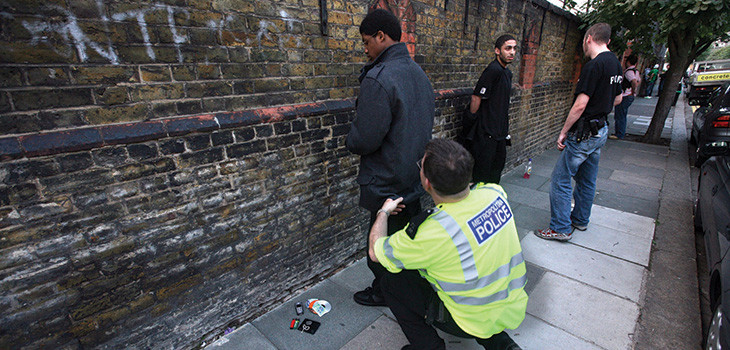
How exactly are the police using their stop and search powers? In this week’s NLJ, Neil Parpworth of Leicester de Montfort University crunches the numbers and drills into the detail to uncover a less-than-rosy picture.

Parpworth finds that, while the annual total for the past three years has been fairly consistent, Black people were nearly five times more likely than White people to be stopped and searched.

He writes that the ‘hit’ rate or arrest rate ‘following a stop and search has demonstrated very clearly that the police often do not find what they were looking for’. During the past 23 years, the total arrest rate has ranged from a low of 7.8% to a high of 17.1% in 2016/17 and 2017/18. Parpworth notes, therefore, that ‘since these years saw the lowest and next lowest use of stop and search powers, the figures show that when they are used in a more targeted manner, such powers are capable of producing more effective results’. 
Issue: 8097 / Categories: Legal News , Criminal
printer mail-details

MOVERS & SHAKERS

Freeths—Ruth Clare

Freeths—Ruth Clare

National real estate team bolstered by partner hire in Manchester

Farrer & Co—Claire Gordon

Farrer & Co—Claire Gordon

Partner appointed head of family team

mfg Solicitors—Neil Harrison

mfg Solicitors—Neil Harrison

Firm strengthens agriculture and rural affairs team with partner return

NEWS
Conveyancing lawyers have enjoyed a rapid win after campaigning against UK Finance’s decision to charge for access to the Mortgage Lenders’ Handbook
The Crown Prosecution Service (CPS) has launched a recruitment drive for talented early career and more senior barristers and solicitors
Regulators differed in the clarity and consistency of their post-Mazur advice and guidance, according to an interim report by the Legal Services Board (LSB)
The dangers of uncritical artificial intelligence (AI) use in legal practice are no longer hypothetical. In this week's NLJ, Dr Charanjit Singh of Holborn Chambers examines cases where lawyers relied on ‘hallucinated’ citations — entirely fictitious authorities generated by AI tools
The Solicitors Act 1974 may still underpin legal regulation, but its age is increasingly showing. Writing in NLJ this week, Victoria Morrison-Hughes of the Association of Costs Lawyers argues that the Act is ‘out of step with modern consumer law’ and actively deters fairness
back-to-top-scroll
