
header-logo header-logo

20 March 2026 / Michael Zander KC
Issue: 8154 / Categories: Features , Procedure & practice , In Court , Criminal , Tribunals
printer mail-detail

Cutting jury trials

244927

Michael Zander KC on the Courts & Tribunals Bill

  • The Courts & Tribunals Bill seeks to reduce the crown court backlog by cutting jury trials, removing defendants’ right to elect jury trial and shifting more cases to magistrates or judge-only trials.
  • The Institute for Government warns the reforms rely on uncertain assumptions and may increase pressure on already backlogged magistrates’ courts.

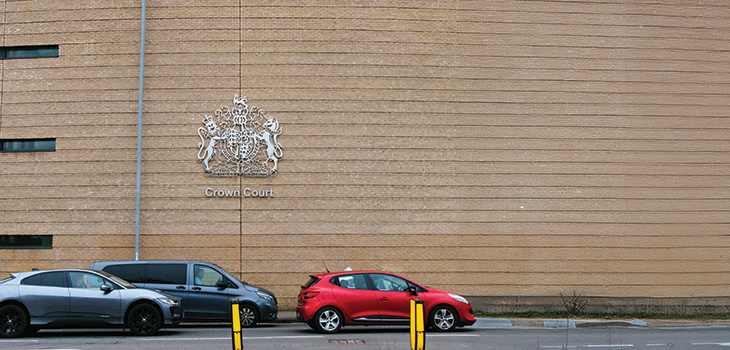
The first seven clauses of the Courts and Tribunals Bill provide the framework for the government’s hope to reduce the backlog of Crown Court cases by way of a drastic reduction of trials by jury.

For an account of those provisions, see below. The Bill also contains provisions on other matters of less salience which are briefly mentioned at the end.

Second Reading

The Second Reading debate on the Bill took place on 10 March. There had been press speculation about a threatened revolt by Labour backbenchers. Karl Turner, MP for Kingston upon Hull East, the leader of the rebels, told the House that he

If you are not a subscriber, subscribe now to read this content
If you are already a subscriber sign in
...or Register for two weeks' free access to subscriber content

MOVERS & SHAKERS

Taylor Rose—Jessica Draganescu & Emily Hewlett

Taylor Rose—Jessica Draganescu & Emily Hewlett

Firm strengthens growth strategy and group litigation capability with senior hires

Farrer & Co—Richard Lane

Farrer & Co—Richard Lane

Londstanding London firm appoints new senior partner

Bird & Bird—Sue McLean

Bird & Bird—Sue McLean

Commercial team in London welcomes technology specialist as partner

NEWS
The legal profession’s claim to be a ‘guardian of fairness’ is under scrutiny after stark findings on gender imbalance and opaque progression. Writing in NLJ this week, Joshua Purser of No5 Barristers’ Chambers and Govindi Deerasinghe of Global 50/50 warn that leadership remains dominated by a narrow elite, with men holding 71% of top court roles
A legal challenge to police disclosure rules has failed, reinforcing a push for transparency in policing. In NLJ this week, Neil Parpworth examines a case where the Metropolitan Police required officers to declare membership of groups like the Freemasons
Bereavement leave is undergoing a quiet but profound transformation. Writing in NLJ this week, Robert Hargreaves of York St John University explains how the Employment Rights Act 2025 introduces a day-one right to leave for a wider range of losses, alongside new provisions for pregnancy loss and bereaved partners
Courts are beginning to grapple with whether AI-generated material is legally privileged—and the answers are mixed. In this week's issue of NLJ, Stacie Bourton, Tom Whittaker & Beata Kolodziej of Burges Salmon examine US rulings showing how easily privilege can be lost
New guidance seeks to bring order to the growing use of artificial intelligence (AI) in expert evidence. Writing in NLJ this week, Minesh Tanna and David Bridge of Simmons & Simmons set out a framework stressing ‘transparency’, ‘explainability’ and ‘reliability’
back-to-top-scroll
