
header-logo header-logo

10 February 2022
Categories: Legal News , Profession , Family
printer mail-detail

AlphaBiolabs accredited as demand for prenatal paternity testing soars

Legal DNA testing provider AlphaBiolabs has become the first UK testing laboratory to be awarded accreditation for its non-invasive prenatal paternity testing

The company, which provides DNA, drug and alcohol testing among a range of testing services for local authorities and family law professionals, was awarded ISO 17025 accreditation by the UK Accreditation Service (UKAS) following a two-year validation process. ISO 17025 accreditation is an internationally recognised standard for Testing and Calibration Laboratories.

Demand for prenatal paternity tests is currently on the increase. In 2021, the company recorded a 47% rise in prenatal paternity tests versus pre-pandemic levels. The company attributes the increase to a rise in public awareness of the test.

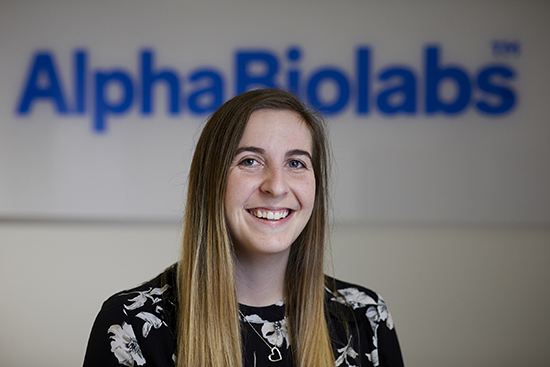
Casey Randall, head of DNA at AlphaBiolabs (pictured), said: ‘Establishing paternity before a baby is born can play a fundamental role in court proceedings, especially in cases where the safeguarding of a child is paramount.

‘With the addition of UKAS accreditation, our legal clients can be confident that AlphaBiolabs’ prenatal paternity testing is performed to the highest possible standard for fast, accurate results that they can trust.’

A non-invasive prenatal paternity test can be carried out from as early as seven weeks into pregnancy, making it possible to determine paternity before a baby is born. The test is 100% safe for both mother and baby, as it only requires cheek swabs and a blood sample from the mother and cheek swabs from the father.

It is possible to identify the unborn baby’s DNA via the mother’s blood sample, as DNA from the foetus is passed into the mother’s bloodstream via the placenta during pregnancy. If the man in question is the biological father of the child, the man and baby will share DNA markers.

Early identification of the biological father can be important when implementing plans for safeguarding, and can help prevent delays to pre-care, care, or supervision proceedings.

For every legal instruction received throughout 2022, AlphaBiolabs is also donating £5 via its Giving Back campaign, supporting four charities that work with vulnerable children and families across the UK.

For more information, visit https://www.alphabiolabs.co.uk/ or to request a quote, call 0333 600 1300 or email testing@alphabiolabs.com.

Categories: Legal News , Profession , Family
printer mail-details

MOVERS & SHAKERS

Taylor Rose—Jessica Draganescu & Emily Hewlett

Taylor Rose—Jessica Draganescu & Emily Hewlett

Firm strengthens growth strategy and group litigation capability with senior hires

Farrer & Co—Richard Lane

Farrer & Co—Richard Lane

Londstanding London firm appoints new senior partner

Bird & Bird—Sue McLean

Bird & Bird—Sue McLean

Commercial team in London welcomes technology specialist as partner

NEWS
The legal profession’s claim to be a ‘guardian of fairness’ is under scrutiny after stark findings on gender imbalance and opaque progression. Writing in NLJ this week, Joshua Purser of No5 Barristers’ Chambers and Govindi Deerasinghe of Global 50/50 warn that leadership remains dominated by a narrow elite, with men holding 71% of top court roles
A legal challenge to police disclosure rules has failed, reinforcing a push for transparency in policing. In NLJ this week, Neil Parpworth examines a case where the Metropolitan Police required officers to declare membership of groups like the Freemasons
Bereavement leave is undergoing a quiet but profound transformation. Writing in NLJ this week, Robert Hargreaves of York St John University explains how the Employment Rights Act 2025 introduces a day-one right to leave for a wider range of losses, alongside new provisions for pregnancy loss and bereaved partners
Courts are beginning to grapple with whether AI-generated material is legally privileged—and the answers are mixed. In this week's issue of NLJ, Stacie Bourton, Tom Whittaker & Beata Kolodziej of Burges Salmon examine US rulings showing how easily privilege can be lost
New guidance seeks to bring order to the growing use of artificial intelligence (AI) in expert evidence. Writing in NLJ this week, Minesh Tanna and David Bridge of Simmons & Simmons set out a framework stressing ‘transparency’, ‘explainability’ and ‘reliability’
back-to-top-scroll
